
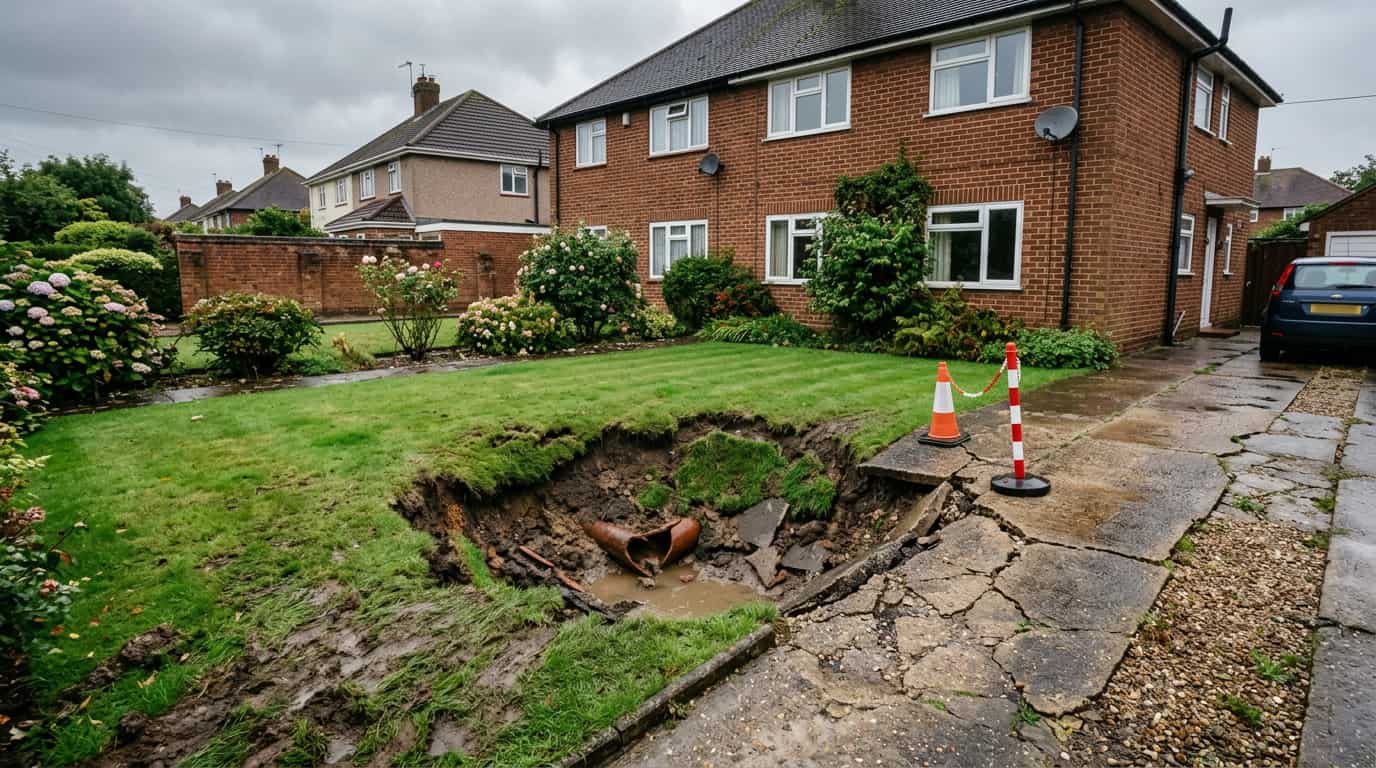
What the signs usually point to
The useful signs were not dramatic at first: repeated foul smells, slower discharge under load, and damp at basement level after use rather than after rainfall alone. A common example is a basement office beneath a victorian townhouse where foul backing-up and floor-level damp from a collapsed clay section and the next decision has to be made around occupied basement rooms and neighbouring utility runs.
Used properly, this kind of example clarifies the decision without turning the whole article into a single case study.
How to check it properly
The first practical step was a targeted CCTV check to confirm whether the symptoms came from a blockage or a structural failure. Once the camera showed the collapsed section, the scope could move straight into a controlled repair plan. For a local route, start with Drain Collapse Repair in London.
The practical value is in checking the issue against the real site conditions instead of relying on generic assumptions about the service or scope.
When to get specialist input
The example matters because it shows when the symptoms move beyond maintenance and into structural failure. That difference is what turns a general drainage problem into a collapse repair decision. The aim is to make the next decision clearer before time, cost, or disruption widen unnecessarily.
That usually means confirming whether the issue needs a survey, a repair route, a tighter scope, or a more informed quote.
If this article matches what you are seeing on site, the next step is a scoped quote based on the actual issue rather than guesswork.
Get a drain inspectionRelated services and guides
A diagnostic check like this is usually needed when slow drainage, smells, and localised damp keep presenting together on an older run, especially below ground-floor or basement level. If you need a local service page, start with Drain Collapse Repair in London. For the same area, the most relevant supporting pages are CCTV drain surveys in London, drain relining in London.
For broader reading, use what a CCTV drain survey actually shows. If you want to compare it with a live job, collapsed clay pipe beneath townhouse forecourt shows how the issue played out on site.
Frequently asked questions
What usually points to a collapse rather than a simple blockage?
Repeated foul smells, persistent slow discharge, local settlement, or basement-level backing-up after previous clearing work are the signs that usually justify a structural survey rather than another routine clear.
Do all collapsed drains need full excavation?
Not always. The survey decides that. Some defects can be lined, but a fully collapsed section or a void affecting the surface above normally pushes the job toward excavation and replacement.
If this article matches the issue you are planning around, the next step is a scoped quote that reflects the real site constraints and the right service route.
Get a drain inspection