
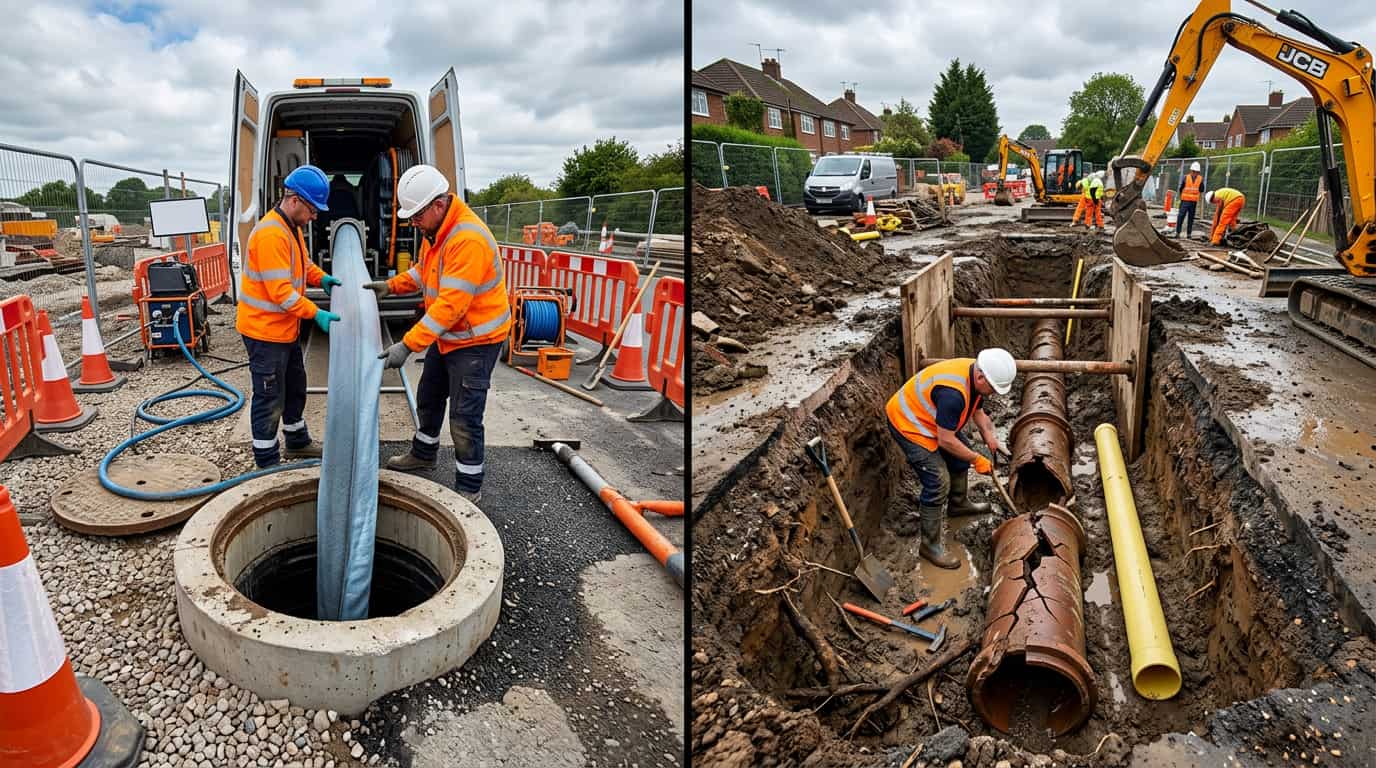
What the decision depends on
On this kind of site, the question is not which method sounds better in theory. The question is whether the pipe is still open enough to line and whether excavation would create a disproportionate amount of disruption. A common example is a basement flat in a period conversion where a cracked branch drain beneath shared internal access and the next decision has to be made around shared hallway route and pipe run beneath neighbouring property.
Used properly, this kind of example clarifies the decision without turning the whole article into a single case study.
Where one route fits better than another
The practical route is to survey first, then compare access, structural condition, and reinstatement risk. In this Richmond case, the branch condition supported relining, so the site avoided tearing through shared finishes to reach the pipe. For a local route, start with Drain Relining in Richmond.
The practical value is in checking the issue against the real site conditions instead of relying on generic assumptions about the service or scope.
How to choose the right scope
The useful outcome is a decision based on pipe condition and site constraints rather than habit. That is why trenchless work often makes sense on conversions, but not every damaged run is a lining candidate. The aim is to make the next decision clearer before time, cost, or disruption widen unnecessarily.
That usually means confirming whether the issue needs a survey, a repair route, a tighter scope, or a more informed quote.
If this article matches what you are seeing on site, the next step is a scoped quote based on the actual issue rather than guesswork.
Book a drain surveyRelated services and guides
This comparison is most relevant when the site is constrained, the property is occupied, or the drain sits below finished floors or shared access where open excavation becomes a wider building issue. If you need a local service page, start with Drain Relining in Richmond. For the same area, the most relevant supporting pages are CCTV drain surveys in Richmond, drain excavation in Richmond.
For broader reading, use what affects CCTV drain survey cost. If you want to compare it with a live job, drain relining for basement flat in Richmond shows how the issue played out on site.
If this article matches the issue you are planning around, the next step is a scoped quote that reflects the real site constraints and the right service route.
Book a drain survey